
- Use two toys at once
- Make sure every cat wins
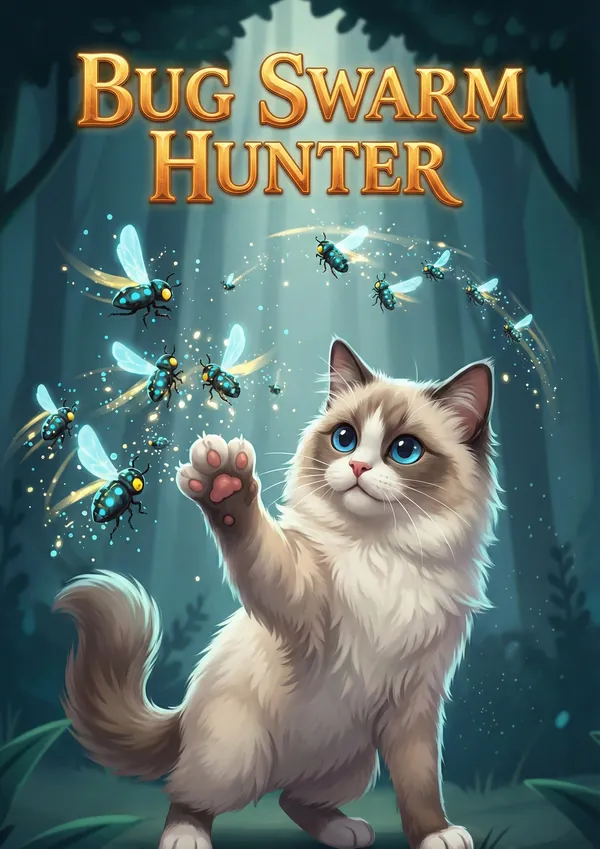
- Bug Swarm has enough targets for two hunters
Living with two cats is wonderful. They can keep each other company, groom each other and share sunny spots. When it comes to play, though, things can get tricky. One cat may be bold and fast while the other hangs back. One may hog every toy. Some pairs play beautifully together, while others turn play into a rivalry. The good news is that with a few simple strategies, both cats can enjoy playtime.
Understand each cat's style
Every cat has a hunting style. Some are sprinters who love fast chases. Others are stalkers who watch patiently before a single perfect pounce. Some prefer toys in the air, others prefer toys on the ground. Spend a few sessions watching each cat individually and notice what excites them. That knowledge helps you plan sessions where both cats get what they love.
Use two toys at once
The simplest trick is to use two wand toys, one in each hand or to ask a family member to help. Each cat gets their own "prey" and there is less competition over a single toy. Keep the toys apart at first so the cats are not directly competing for the same spot.
Give the quieter cat their own time
If one cat always wins, the other may give up. Try short individual sessions in separate rooms, especially for a shy cat. Ten minutes of one-on-one play can build confidence and lets the quieter cat experience a successful hunt without pressure.
Make sure everyone wins
A catch is the most satisfying part of a hunt. In a shared session, make sure each cat gets to catch the toy. If the bold cat always grabs it first, move the toy toward the other cat for the finish.
Sharing screen games
Screen games can be great for two cats, especially games with lots of targets. In Bug Swarm, several bugs scurry at once, so both cats can hunt their own target. A tablet works better than a phone because there is more space for two sets of paws.
- Lay the tablet flat on a soft rug, away from furniture edges.
- Sit between the cats if they get too close to each other.
- Keep sessions short, around 5 to 10 minutes.
- Finish with two real toys so both cats get a physical catch.
Cat Entertainment Videos on a TV are perfect for shared watching. Both cats can sit side by side and enjoy garden birds or forest critters without competing. See our safe screen play guide for setup tips.
Play or fight? Reading the signs
Cats often play rough with each other and it can be hard to tell play from a real disagreement. Signs of healthy play include taking turns chasing, relaxed bodies, quiet play without hissing and both cats coming back for more. Signs of a real conflict include flattened ears, hissing, growling, puffed fur and one cat repeatedly trying to escape.
If play tips into conflict, calmly interrupt with a toy or a cushion between them, not your hands and give each cat space. Frequent conflicts may need a more structured reintroduction or advice from your vet or a behaviour professional.
Keep resources plentiful
Many multi-cat tensions come from competition over resources. A common guideline is one resource per cat plus one extra: litter trays, water bowls, beds and perches. Vertical space and hiding spots help too, as described in our indoor cat enrichment ideas.
Matching play to age and energy
Many multi-cat homes have cats of different ages, such as a lively young cat and a calmer senior. The young cat may want long, energetic chases while the older cat prefers slow, sneaky movements on the ground. Try a split session: start with gentle ground-level play for the senior cat, then switch to fast, airborne play for the younger one while the senior watches or rests. Each cat gets a session that suits their body.
Screen play can help here too. A calm game like Feather Drift may suit an older cat, while Bug Swarm or Laser Dot Chaos can tire out an energetic youngster. Rotating games keeps both cats interested.
Food after play, in separate spots
Following play with food completes the hunting sequence, but in a multi-cat home it is best to feed cats a little apart from each other. Competition at the food bowl can undo the calm that play created. Separate bowls, placed out of each other's direct line of sight, help every cat eat in peace.
Afterwards, notice where each cat chooses to rest. Many bonded pairs nap close together after a good session, which is a lovely sign that shared play is building a positive relationship.
Calm time together
After play, a shared calm-down can help two cats associate each other with pleasant moments. Serve meals in separate spots, then dim the lights and play soft music. Many owners find gentle healing frequency music helps the whole household settle. Our guide on calming an anxious cat with sound has more ideas.
Introducing a new cat through play
When bringing a second cat home, play can be a bridge. Start with separate sessions on either side of a closed door, then a baby gate and finally in the same room with two toys and plenty of distance. Short, positive sessions build good associations over time.
The bottom line
Two cats rarely play the same way and that is fine. Give each one their style of play, make sure everyone wins and keep the atmosphere calm. With a little planning, playtime becomes something your cats look forward to together.

Ready to play? 🐾
Download Cat Paw Games free on Google Play and start with two games, the daily streak and a fun cat video.
GET IT ONGoogle Play